Uplighting vs Downlighting: Which Is Better for Modern Homes?
Uplighting directs light upward from floor or wall level to highlight architectural features, create ambient glow, and add visual drama, while downlighting projects light downward from ceiling level for functional brightness and task illumination. Neither is universally better — the right choice depends on your design goals, room type, and whether you need ambient atmosphere, functional brightness, or both.
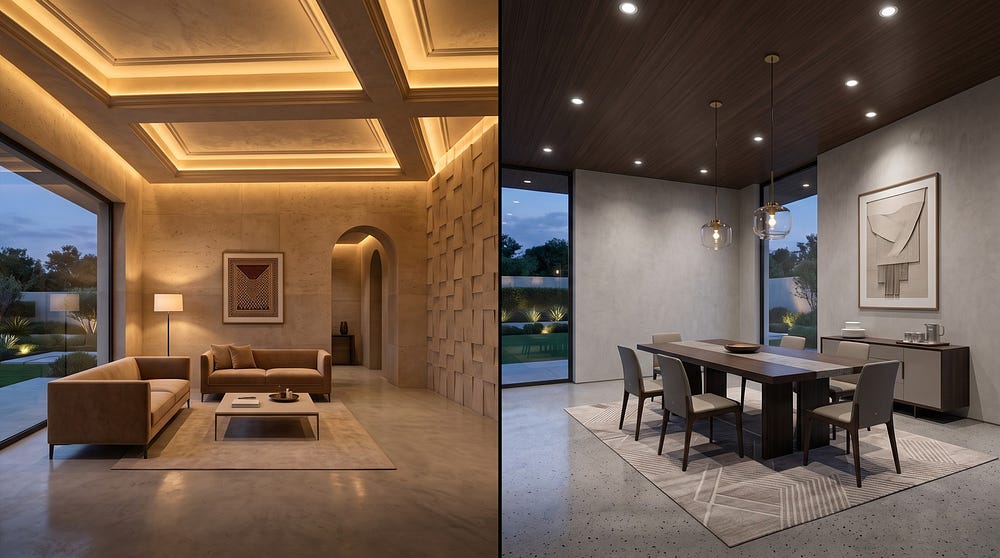
What Is Uplighting?
Uplighting is a lighting technique where fixtures are positioned below the subject and aimed upward, projecting light onto walls, ceilings, columns, facades, or architectural features from below. The light source itself is hidden — recessed into the floor, concealed behind furniture, or mounted low on a wall — and only the illuminated surface is visible.
How Does Uplighting Work?
Uplighting works by bouncing light off a surface rather than projecting it directly at a space. A fixture placed at floor level aims a controlled beam upward — the light travels up the surface, reflects, and fills the surrounding area with soft, diffused illumination. The angle, beam spread, and colour temperature of the fixture determine whether the effect is dramatic (narrow beam, high contrast) or soft (wide beam, even wash).
In architectural applications, uplighting is typically driven by LED fixtures with precise beam angles — anything from a 10-degree narrow spot for highlighting a column to a 60-degree flood for washing an entire wall. For smart home-integrated spaces, uplight fixtures can be dimmed, colour-tuned, or scene-controlled through lighting control systems.
Where Is Uplighting Commonly Used?
Uplighting is used across a wide range of residential and commercial applications in India. In living rooms, cove lighting — a form of uplighting where LED strips are hidden in a ceiling recess — creates a floating, ambient glow. In facade lighting, ground-mounted or wall-recessed uplights project light onto building exteriors to create dramatic after-dark presence. In landscape settings, uplights positioned at the base of trees, columns, and garden features create architectural highlights that define outdoor spaces at night.
Other common applications include wall washing in corridors, accent uplighting on feature walls, and staircase lighting where recessed floor uplights guide movement while adding a visual design element.
What Is Downlighting?
Downlighting is a lighting technique where fixtures are positioned at ceiling level and project light downward into the room below. Recessed downlights, surface-mounted spotlights, pendant lights, and track lighting are all forms of downlighting — the defining characteristic is that light travels from above to below, illuminating the floor plane, surfaces, and occupants of a space.
How Does Downlighting Work?
A downlight fixture — whether recessed into the ceiling, surface-mounted, or suspended — contains a light source directed downward through a reflector or lens that controls the beam spread. Wide-angle downlights (60–120 degrees) create general, even illumination across a room. Narrow-angle spotlights (10–30 degrees) concentrate light on a specific object or surface for accent or task purposes.
Most modern downlighting in Indian homes uses LED MR16 or GU10 lamps in recessed housings, or integrated LED downlight units. In premium installations, DALI or DMX-dimmable downlights allow full scene control through a home automation system — the same wall panel or app that controls the air conditioning can set the downlights to a specific level for a movie, a dinner, or a working session.
Where Is Downlighting Commonly Used?
Downlighting is the primary lighting technique in most Indian homes — kitchens, bathrooms, offices, and utility spaces rely almost entirely on downlighting for functional brightness. In living rooms and bedrooms, recessed downlights provide the base layer of general illumination onto which accent and ambient lighting is layered. In retail and hospitality spaces, track-mounted spotlights and adjustable downlights highlight merchandise and key visual areas.
Uplighting vs Downlighting: What’s the Difference?
FactorUplightingDownlightingLight directionBottom to topTop to bottomPrimary purposeAmbience, drama, architectural highlightGeneral illumination, task lightingAmbience createdSoft, indirect, dramaticDirect, functional, evenBrightness levelLower — indirect, reflectedHigher — direct projectionEnergy efficiencyModerate — some light lost in reflectionHigh — direct, efficient deliveryBest applicationsFacades, cove lighting, landscape, feature wallsKitchens, bathrooms, offices, general roomsInstallationFloor/wall level, during construction preferredCeiling level, easier retrofitMaintenanceLow — LED sources, minimal access neededLow — ceiling access straightforwardApproximate cost₹800–₹5,000+ per fixture₹300–₹3,000 per fixtureLuxury appealHigh — creates premium, layered effectModerate — functional, can feel flat alone
Which Lighting Technique Is Better for Different Rooms?
Living Room
The living room benefits most from a combination of both — downlights provide the functional base layer for daytime activities, while cove uplighting (hidden LED strips in ceiling recesses) creates the ambient, premium atmosphere for evenings. In our experience at Brightmatic, a living room with only downlights feels bright but flat; a living room with layered uplighting and downlighting feels designed. For inspiration, our guide on what is ambient lighting covers how ambient layers work in living spaces.
Bedroom
Bedrooms benefit from warm uplighting as the primary ambient source — cove lighting around a tray ceiling at 2700–3000K creates a calming, sleep-supportive atmosphere. Downlights work as secondary task sources for dressing areas and reading zones, ideally on separate circuits so the uplighting can remain on while overhead lights are off.
Kitchen
The kitchen is predominantly a downlighting space — task lighting over countertops, cooking surfaces, and the sink requires direct, even illumination that uplighting cannot effectively provide. Under-cabinet LED strips (a form of low-level task lighting) supplement overhead downlights for countertop work. Uplighting has limited use in kitchens outside of decorative cove effects in open-plan spaces.
Bathroom
Downlighting dominates in bathrooms — recessed ceiling downlights provide general illumination, and vanity lighting above mirrors provides task light for grooming. Uplighting in bathrooms is primarily decorative — wall-level recessed uplights in shower niches or behind freestanding bathtubs create a spa-like atmosphere in premium bathroom designs.
Hallway
Corridors and hallways benefit from a combination: recessed downlights provide wayfinding illumination, while low-level wall uplights or floor-recessed uplights add a design element and reduce the clinical feel of a purely downlit corridor. In villa entrances and stairways, uplighting on wall features creates a welcoming, grand first impression.
Home Theatre
Home theatre lighting design heavily favours uplighting for ambient atmosphere — cove lighting around the perimeter of the ceiling, wall washers on side panels, and low-level floor uplights along seating aisles create a cinema-appropriate atmosphere without introducing glare that compromises the screen image. Downlights are used only in entry areas and are switched off during viewing. For detailed guidance, see our architectural lighting services.
Outdoor & Facade
Outdoor and facade applications are predominantly uplighting territory. Ground-mounted uplights on building facades, landscape uplighting on trees and garden features, and architectural wall washers all use upward-directed light to create the after-dark identity of a property. Downlighting in outdoor spaces is primarily functional — pathway lighting, porch lights, and security lighting — rather than architectural.
When Should You Choose Uplighting?
Uplighting is the right choice when the goal is atmosphere, architectural expression, or visual drama rather than functional brightness. Specific applications where uplighting consistently outperforms downlighting:
Cove lighting — hidden LED strips in ceiling recesses that wash the ceiling with soft, indirect light, making rooms feel taller and more refined. This is one of the most popular premium lighting upgrades in Indian villas and apartments. Our guide on what is cove lighting covers this in depth.
Wall washing — even uplighting across a feature wall to create a luminous backdrop. Works particularly well on textured surfaces like stone, exposed brick, or fluted panels. Our guide on wall washing vs wall grazing explains the difference in technique and effect.
Architectural lighting — highlighting columns, archways, cornices, and structural features that define a space’s character. See our architectural lighting service page for examples of how this works in practice.
Facades — ground-mounted or wall-recessed fixtures that reveal a building’s exterior form after dark. Uplighting is the foundation of any facade lighting design.
Landscape lighting — uplights at the base of trees, shrubs, and garden features create a dramatic nighttime garden that is entirely different from the daytime version.
Luxury villas — in high-specification residential projects, uplighting is what separates a premium lighting scheme from a standard one. Cove uplighting, facade uplighting, and layered ambient uplighting together create the visual quality associated with luxury hospitality environments.
When Should You Choose Downlighting?
Downlighting is the right choice when functional brightness, task performance, or even general illumination is the priority:
General lighting — the base layer of illumination in any room comes from downlighting. Without an adequate downlighting layer, a space feels dark and impractical regardless of how beautiful the uplighting is.
Task lighting — reading, cooking, grooming, and working all require direct, focused light from above. Downlights positioned over specific work surfaces — kitchen countertops, vanity mirrors, study desks — perform tasks that uplighting cannot.
Kitchens — functional, even ceiling illumination is the priority. Recessed downlights over worktops, islands, and the cooking zone are the standard specification.
Bathrooms — ceiling downlights plus vanity lighting provide the practical illumination needed for grooming tasks where colour rendering and even brightness matter.
Office spaces — task performance is the priority in office environments. Direct downlighting, ideally with high colour rendering index (CRI 90+) and neutral colour temperature (4000K), supports focus and accurate visual work.
Can You Combine Uplighting and Downlighting?
Yes — and in most well-designed spaces, the two work together rather than as alternatives. This is the principle behind layered lighting — using multiple light sources at different heights and angles to create a space that functions well and feels refined.
The typical layering approach in a premium Indian living room or villa involves downlights providing the functional base layer at full brightness for daytime activities, cove uplighting and wall washers creating the ambient atmosphere layer for evenings, and accent downlights or spotlights highlighting artwork, shelving, and focal points.
In a smart home context, these layers are controlled independently — a single “Evening” scene might dim the downlights to 20%, bring the cove uplighting to 60%, and activate the accent layer at 40%, creating an atmosphere that no single lighting type alone could produce.
Uplighting vs Downlighting Cost in India
The figures below are indicative estimates. Actual cost depends on fixture specification, brand, control system, and installation complexity — confirmed after a site assessment.
TypeApproximate Cost Per PointBasic downlighting (LED recessed)₹300 — ₹800Premium downlighting (DALI dimmable, high CRI)₹1,200 — ₹3,000Architectural uplighting (wall washers, facade)₹1,500 — ₹5,000+Cove uplighting (LED strip + aluminum profile)₹400 — ₹1,200 per linear metreSmart controlled lighting (DMX/KNX integrated)₹2,000 — ₹8,000+ per point
For a complete breakdown of lighting costs by room and home size, see our guide on false ceiling lighting design ideas for Indian homes.
Originally Published at:
https://www.brightmatic.in/insights/uplighting-vs-downlighting-comparison-guide


Comments
Post a Comment