WHAT IS LAYERED LIGHTING? THE ULTIMATE GUIDE FOR INDIAN HOMES
Have you ever walked into a high-end hotel lobby or a luxury villa in South Delhi and felt an immediate sense of calm and sophistication? You look around, and the room isn’t just “bright” — it has depth. It feels warm, inviting, and expensive.
Now, compare that to the typical Indian apartment. Often, we rely on a single, high-wattage LED batten or a central “tube light” that floods the room with a harsh, flat glare. It’s functional, sure. But it’s also sterile. It flattens your expensive furniture, washes out the colors of your curtains, and creates shadows in all the wrong places.
The secret difference? Layered Lighting.
In this guide, we’re going to break down how you can move away from “one-size-fits-all” lighting and use the Brightmatic approach to design a home that looks like it stepped off the pages of an architectural magazine.
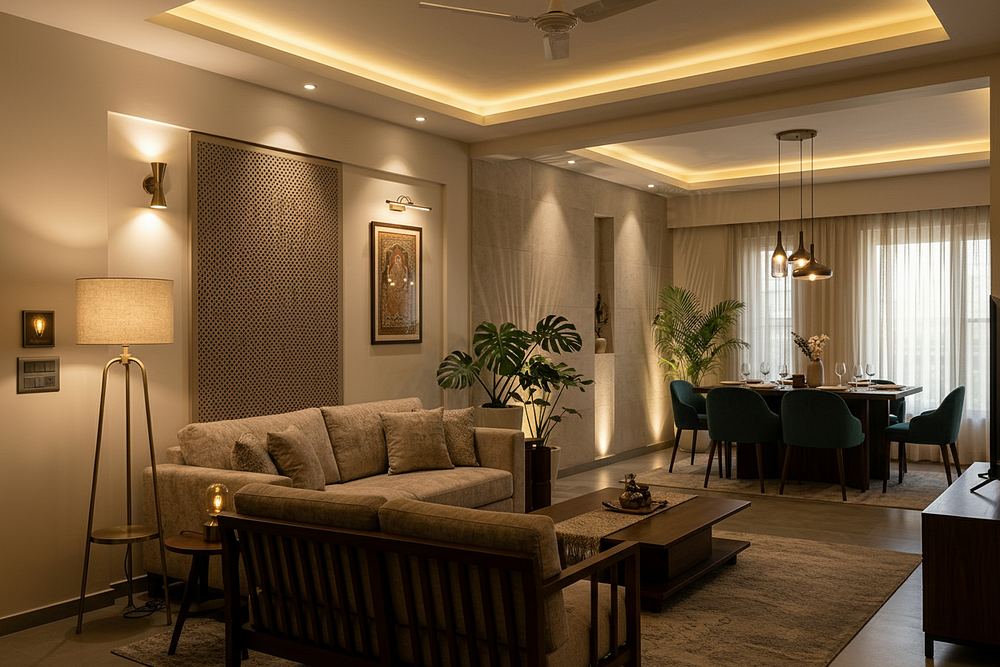
What Exactly is Layered Lighting?
Think of lighting like an outfit. You wouldn’t just wear a heavy winter coat and nothing else, right? You layer a shirt, perhaps a sweater, and then the coat. Each piece has a different job.
Layered lighting is the art of combining three different types of illumination to create a balanced, flexible, and visually interesting space. In a modern Indian home, where one room often serves as a study, a guest lounge, and a place for family dinners, layering isn’t just a luxury — it’s a necessity.
The 3 Essential Layers Every Room Needs
To master this, you don’t need to be an interior designer. You just need to understand the “Big Three.”
1. Ambient Lighting: The Foundation
Ambient lighting is your “base layer.” Its job is to provide enough light so you can move around safely without tripping over the Diwan or the coffee table. It mimics natural sunlight and provides a general glow.
- In the Indian Context: We love our false ceilings. Recessed COB lights or “Cove lighting” (the hidden strips inside the ceiling borders) are the perfect ambient sources.
- The Brightmatic Tip: Avoid “Over-lighting.” Your ambient layer should be soft. If it’s too bright, you won’t be able to see the other layers, and your room will feel like a hospital corridor.
2. Task Lighting: Focus and Function
This is where most homes fail. Ambient light is great for walking, but it’s terrible for working. Task lighting is a concentrated beam of light meant for a specific activity.
- The Kitchen: If you’re chopping vegetables for a heavy curry, a ceiling light behind you will cast a shadow on the counter. You need under-cabinet LED strips hitting the granite directly.
- The Study: A sleek desk lamp that focuses light on your laptop or notebook without reflecting off the screen.
- The Vanity: Sconces on either side of the bathroom mirror so you can get ready without shadows under your eyes.
3. Accent Lighting: Style and Drama
This is the “jewelry” of the room. Accent lighting doesn’t help you see better; it helps you look at what’s important. It creates focal points.
- Highlighting Heritage: Do you have a beautiful Ganesha idol, a textured Jali wall, or a piece of art from a local gallery? A dedicated spotlight or “picture light” makes it pop.
- The “Wow” Factor: Uplighters placed behind indoor plants like a Monstera or a Palm can create beautiful, dramatic shadows on the walls during the evening.
Why Traditional Single-Bulb Rooms Don’t Work
For decades, the “Tube Light” was the king of the Indian household. It was cheap and bright. But as our homes have evolved, our lighting needs to as well.
When you use only one light source, you create a “flat” environment. There is no contrast. Contrast is what the human eye perceives as “beauty.” By layering, you control where the eye goes. You can dim the ambient lights and turn on the accent lights when guests arrive to create an intimate “lounge” vibe. You can’t do that with a single tube light.
Expert Tips for Layering Light in Your Home
Before you start buying fixtures, keep these “Brightmatic” rules in mind:
- Warm vs. Cool: In India, we often default to “Cool White” (6500K). However, for a premium home feel, try Warm White (3000K) for your accent and ambient layers. It makes wooden furniture and gold accents look stunning.
- Use Different Heights: Don’t put all your lights on the ceiling. Use floor lamps, table lamps, and wall sconces to spread light at different eye levels.
- The Rule of Threes: Try to have at least three different light sources in every main living area.
A Room-by-Room Guide to Layering Light
Designing a lighting plan can feel overwhelming, but the trick is to break it down by how you actually use each room in your home.
The Living Room: Your Home’s First Impression
In most Indian homes, the living room is the “everything” room. It’s where you host Diwali parties, watch cricket matches, and sometimes even work.
- The Ambient Layer: High-quality recessed COB lights in the false ceiling provide a soft, even glow.
- The Task Layer: A stylish floor lamp next to your favorite armchair for evening reading.
- The Accent Layer: Use “Wall Washers” to highlight a textured stone wall or a large piece of art. If you have a showcase with trophies or travel souvenirs, small LED “pucks” inside the cabinet add a museum-like quality.
The Kitchen: Where Function Meets Flavor
Indian cooking involves a lot of prep — chopping, grinding, and spice-mixing. Shadows are your enemy here.
- The Ambient Layer: Bright, cool-toned ceiling lights to keep the space energized.
- The Task Layer: Under-cabinet LED strips are a game-changer. They light up your countertop directly, making it easier to see your spices and avoid accidents.
- The Accent Layer: Pendant lights over a breakfast counter or “island” add a touch of personality and separate the kitchen from the dining area.
The Bedroom: Your Personal Sanctuary
Your bedroom should be a place where your brain knows it’s time to wind down.
- The Ambient Layer: Indirect “Cove” lighting that bounces off the ceiling. This prevents harsh light from hitting your eyes while you’re lying in bed.
- The Task Layer: Sleek wall-mounted sconces on either side of the headboard. Choose ones with adjustable arms so you can read without disturbing your partner.
- The Accent Layer: Low-level strip lighting under the bed frame (a “floating bed” effect) acts as a perfect nightlight that looks incredibly modern.
The Brightmatic Edge: Making Layers “Smart”
The biggest challenge with layered lighting used to be the “Switchboard Struggle.” Nobody wants to walk across the room to flip five different switches just to set the mood for a movie.
This is where Smart Home Automation changes the game.
With a smart system, you can create “Scenes.” With one tap on your phone or a simple voice command like “Alexa, it’s Movie Night,” your Brightmatic system can:
- Turn off the bright Ambient ceiling lights.
- Dim the Accent wall-washers to 10%.
- Keep the floor lamp on a warm, low glow.
Suddenly, your home isn’t just a building; it’s a responsive environment that understands your needs.
Common Mistakes to Avoid
Before you call your electrician, keep these three pitfalls in mind:
- The “Swiss Cheese” Ceiling: Don’t overdo the recessed lights. Too many holes in your false ceiling make it look cluttered. Space them out according to the room’s square footage.
- Wrong Color Temperatures: Never mix “Cool Blue” light with “Warm Yellow” light in the same layer. It creates visual confusion and makes the room feel “cheap.”
- Ignoring Dimmers: If you can’t install a full smart system yet, at least install manual dimmers. Being able to control the intensity of your lights is the easiest way to achieve a layered effect.
Conclusion: Transform Your Home Today
Layered lighting is more than just a home decor trend; it’s about improving your quality of life. It’s about having the right light to work efficiently, the soft light to relax deeply, and the dramatic light to celebrate your home’s beauty.
At Brightmatic, we believe that every Indian home deserves to shine in its best light. Whether you are moving into a new apartment or looking to renovate your current space, starting with a layered lighting plan is the single most impactful change you can make.
Contact Brightmatic Today for a personalized lighting consultation and let’s make your home shine!
Originally Published at: https://www.brightmatic.in/insights/what-is-layered-lighting-the-ultimate-guide-for-indian-homes


Comments
Post a Comment